

IWB vs OWB: Matching Holster Style to Your Daily Routine
Share
The right carry position changes everything about your daily experience with a concealed firearm.
Walk into any gun store and you'll face an immediate decision: inside the waistband or outside the waistband? The goal is to match your holster to how you actually live, work, and move throughout your day.
The difference between IWB and OWB carry affects concealment, comfort, accessibility, and how your firearm integrates into your wardrobe. Understanding these distinctions helps you build a carry system that works with your lifestyle instead of against it.
What Is IWB (Inside Waistband) Carry?
Inside waistband holsters position your firearm inside your pants, between your body and your waistband. The holster clips to your belt, with the majority of the gun tucked inside your pants.
IWB carry characteristics:
- Maximum concealment under untucked shirts
- Requires pants one size larger for comfort
- Keeps firearm tight against your body
- Works with everyday casual clothing
- Most popular for appendix (AIWB) or strong-side hip carry
IWB holsters use belt clips, soft loops, or quick-attachment systems to secure the holster to your belt. Quality IWB holsters include full sweat guards to protect both your firearm and your skin from moisture and discomfort during extended wear.
What Is OWB (Outside Waistband) Carry?
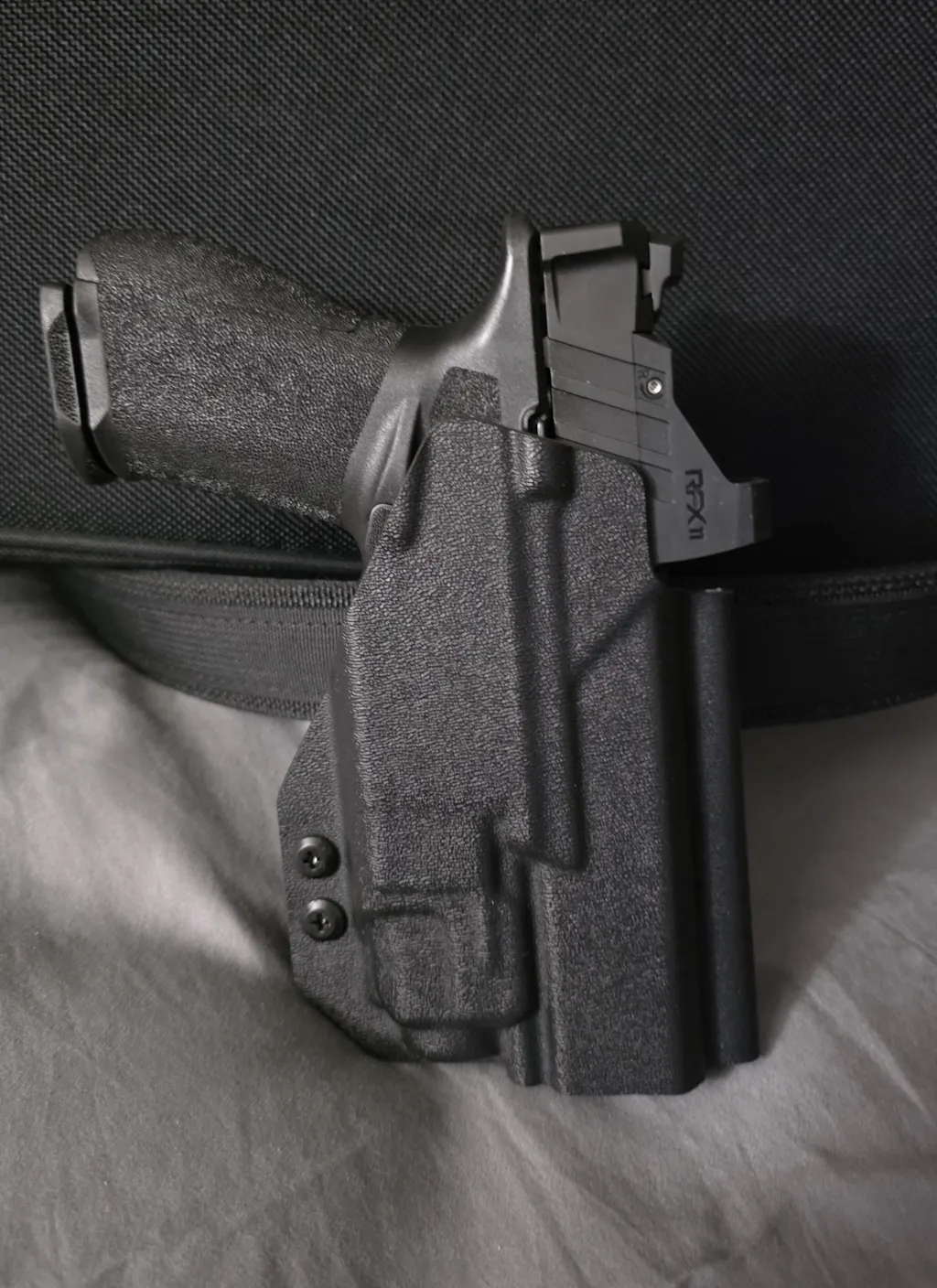
Outside waistband holsters sit on the outside of your pants, attached to your belt. The entire holster and most of the firearm remain outside your waistband.
OWB carry characteristics:
- Easier to draw quickly and consistently
- More comfortable for extended periods
- Requires covering garment for concealment
- Better weight distribution on your belt
- Traditional choice for open carry and duty use
OWB holsters typically attach via belt loops or paddle systems. They position the firearm slightly farther from your body, which improves comfort but requires more substantial cover garments for concealed carry.
How Does Your Daily Wardrobe Affect Holster Choice?
Your clothing determines which carry method actually works in real life.
IWB works best with:
- Untucked shirts or button-downs
- T-shirts with light jackets or overshirts
- Casual business attire
- Jeans and casual pants with room in the waist
- Everyday street clothes
OWB requires:
- Jackets, vests, or unbuttoned overshirts
- Longer untucked shirts with substantial fabric
- Layered clothing systems
- Cool weather wardrobes
- Structured cover garments that drape properly
If you live in Florida and wear t-shirts year-round, OWB concealment becomes significantly more challenging. If you're in Colorado, wearing layers most of the year, OWB offers real advantages. Your climate and typical dress code matter more than most people realize.
Which Position Offers Better Concealment?
IWB wins decisively for concealment in most situations.
The inside-waistband position keeps your firearm tucked tight against your body, minimizing printing and eliminating the telltale bulge that reveals OWB carry. A quality IWB holster with a claw or wing attachment actively pushes the grip into your body, further reducing visibility.
OWB holsters sit farther from your body by design. Even with a covering garment, the firearm's outline can print when you bend, reach, or sit. Wind, movement, or shifting fabric can expose the holster. OWB concealment depends heavily on proper cover garment selection and conscious body positioning.
For deep concealment in everyday environments—offices, stores, restaurants—IWB remains the superior choice. OWB works better for situations where some visibility is acceptable or when open carry is legal and preferred.
What About Comfort During Long Days?
Comfort represents the most subjective aspect of carry position, and opinions vary dramatically based on body type, firearm choice, and personal preference.
IWB comfort factors:
- More direct contact between gun and body
- Can dig into skin when sitting
- Requires larger pants for proper fit
- Pressure concentrates at fewer points
- Sweat guard essential for extended wear
OWB comfort factors:
- Less direct contact with firearm
- Better weight distribution across belt
- No need to size up pants
- Can interfere with seating in vehicles
- More movement of holster during activity
Many carriers find OWB more comfortable for all-day wear, particularly with heavier firearms. The gun's weight distributes across the belt rather than pressing directly into your body. Others prefer IWB specifically because the gun stays locked in position against their body without shifting or moving.
Your body type significantly affects comfort. Individuals with little natural curve at the waistline often prefer OWB. Those with more pronounced waist definition frequently find IWB disappears more naturally into their body contours.
How Does Carry Position Affect Your Draw?
Access and draw speed differ noticeably between IWB and OWB configurations.
OWB holsters typically offer faster, more consistent draws. The firearm sits in a more accessible position with less fabric interference. Your draw stroke remains relatively consistent regardless of clothing. The grip presents at a more natural angle for immediate acquisition.
IWB draws require clearing your cover garment decisively. Shirts can bunch, catch, or interfere with your grip acquisition. The draw angle varies more depending on holster position and body movement. Practice and proper technique become even more critical with IWB carry.
That said, a well-practiced IWB draw from appendix position can be extremely fast. The forward position allows you to see your draw, and the straight-up motion is efficient. Many competitive shooters and professionals prefer AIWB for exactly these reasons.
Does Your Activity Level Matter?
Your daily activities dramatically impact which carry method actually works.
Desk jobs and office environments favor IWB carry. You'll spend hours sitting, where OWB can dig into chairs and print more obviously. IWB keeps everything tucked away during meetings and professional interactions.
Physical labor and active work often works better with OWB. The holster won't shift position during bending, kneeling, or heavy lifting. Nothing presses directly into your body during constant movement. The gun remains accessible even when your shirt becomes untucked through activity.
Driving extensively presents challenges for both methods. IWB can become uncomfortable during long periods seated, particularly strong-side carry. OWB digs into car seats and can interfere with seatbelts. Many professional drivers prefer appendix IWB specifically because it doesn't conflict with seats or belts.
Active lifestyles with varied activities might require both carry methods. An IWB setup for running errands and office time, switching to OWB for outdoor activities, property work, or situations where concealment matters less.
What About Appendix Carry?
Appendix inside waistband (AIWB) has become increasingly popular and deserves specific consideration.
AIWB positions your firearm at the front of your body, roughly at the 1 o'clock position for right-handed carriers. This offers several distinct advantages: excellent concealment when standing, extremely fast access, ability to see your draw, and protection of your firearm while seated.
The position also presents challenges. It's less comfortable when sitting, particularly in vehicles or at desks. It requires very deliberate holster selection and proper belt support. Body type significantly affects AIWB comfort, as well. Those with more pronounced midsections often find the position uncomfortable.
Safety concerns with AIWB focus on muzzle direction pointing at your femoral artery. Proper holster selection with full trigger guard coverage and safe holstering practices mitigate these concerns. Many professionals carry AIWB daily without incident.
Quality Matters More Than Position
Regardless of whether you choose IWB or OWB, holster quality determines your actual carry experience.
Essential features for any carry holster:
- Custom molding for your specific firearm and light
- Adjustable retention for personal preference
- Proper trigger guard coverage with audible click
- Quality hardware with maximum thread engagement
- Full sweat guard for IWB configurations
- Smooth edges and rounded corners
- Reliable attachment system that stays secure
Cheap holsters fail in predictable ways: inconsistent retention, trigger guard gaps, loose attachments, and uncomfortable edges. These failures affect both IWB and OWB equally. The $50 difference between budget and quality holsters eliminates daily frustration and potential safety issues.
Frequently Asked Questions About IWB vs. OWB
Can I carry IWB without a gun belt?
Not effectively. Regular belts lack the rigidity to support a firearm's weight without sagging, twisting, or rolling. A quality gun belt is essential for both IWB and OWB carry.
Is OWB carry actually concealable?
Yes, with appropriate cover garments. Untucked button-down shirts, light jackets, and structured overshirts can effectively conceal OWB holsters. It requires more deliberate wardrobe choices than IWB.
Which is better for larger firearms?
OWB generally handles full-size pistols more comfortably. IWB works with compact and subcompact models more easily. That said, many carriers successfully conceal full-size guns IWB with proper holster selection and clothing.
Do I need different holsters for IWB and OWB?
Yes. Holsters are specifically designed for either inside or outside waistband carry. The attachment systems, angles, and dimensions differ significantly between the two styles.
How much should my pants size increase for IWB carry?
Most carriers need 1-2 inches larger in waist size for comfortable IWB carry. This allows room for the holster and firearm without excessive tightness.
Can I switch between IWB and OWB throughout the day
Technically yes, but it's impractical. Most carriers choose based on their day's activities and stick with that method. Some keep IWB in their vehicle for when they remove jackets or change environments.
Making the Right Choice for Your Lifestyle
IWB and OWB aren't competing solutions where one is universally better. They're specialized tools for different carrying contexts.
The key is matching your holster style to your actual life, not aspirational scenarios or range activities, but your real daily routine.
Choose quality holsters designed specifically for your carry position, invest in proper belts and clothing, and practice until your draw becomes automatic.