
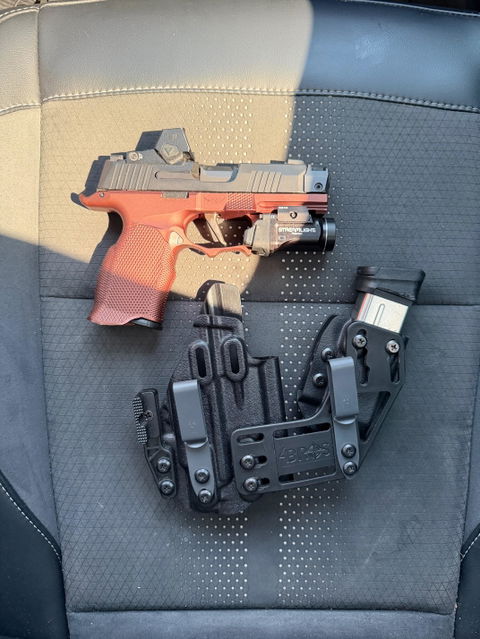
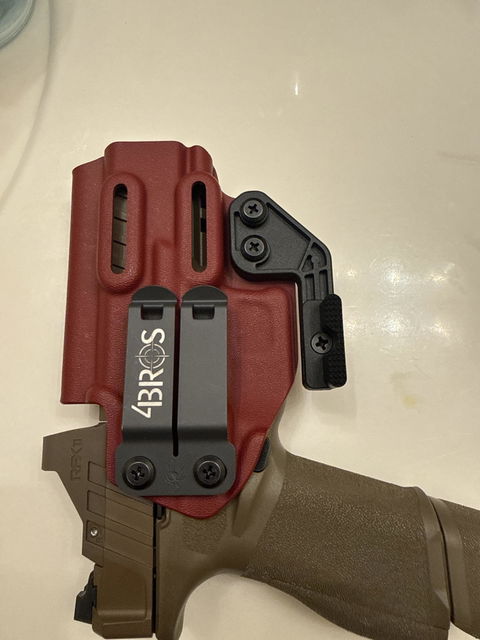
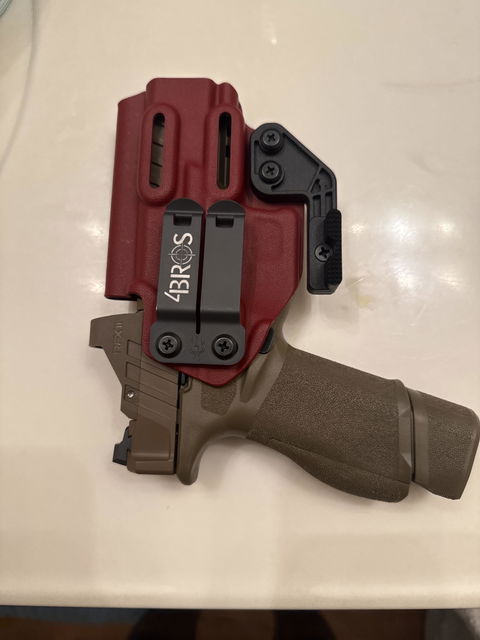
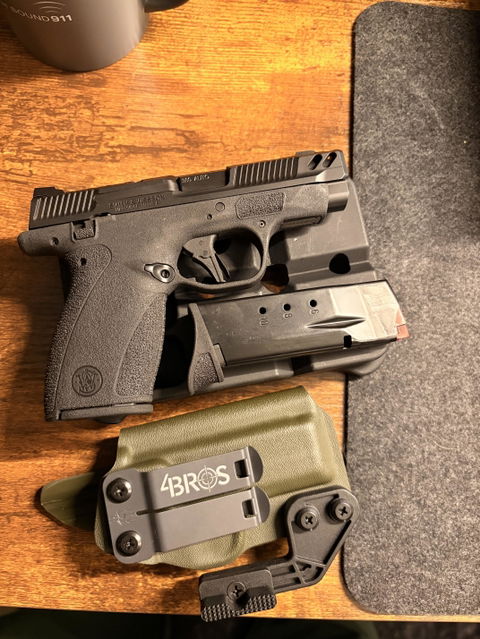
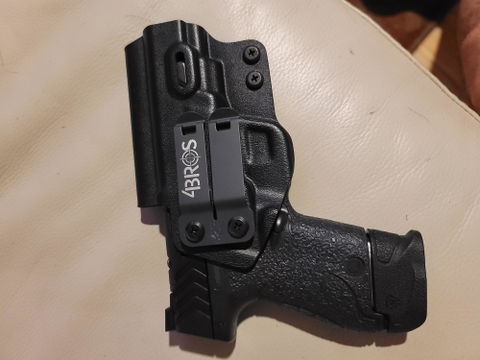
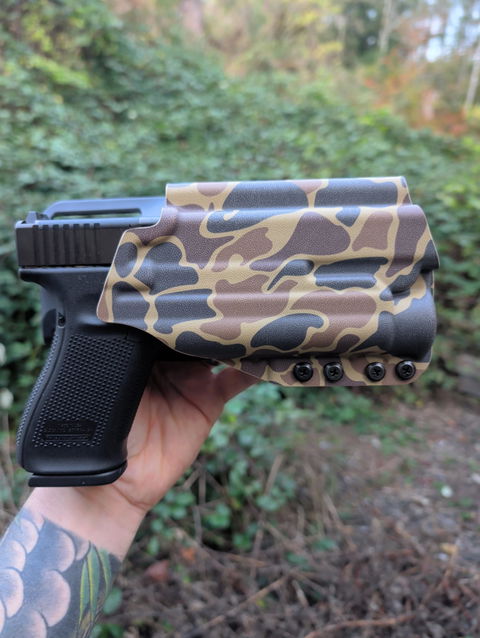
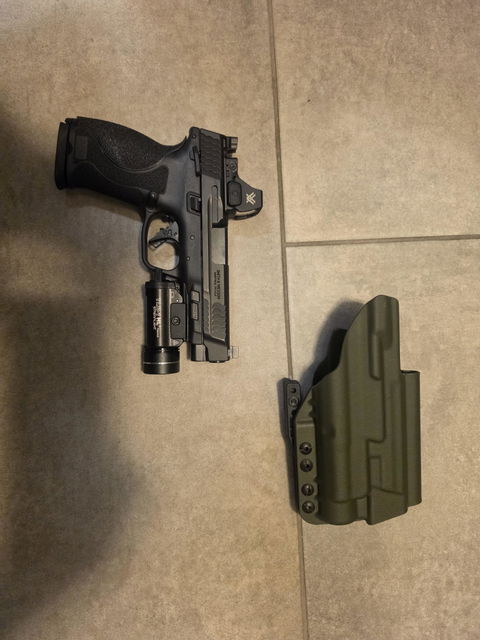
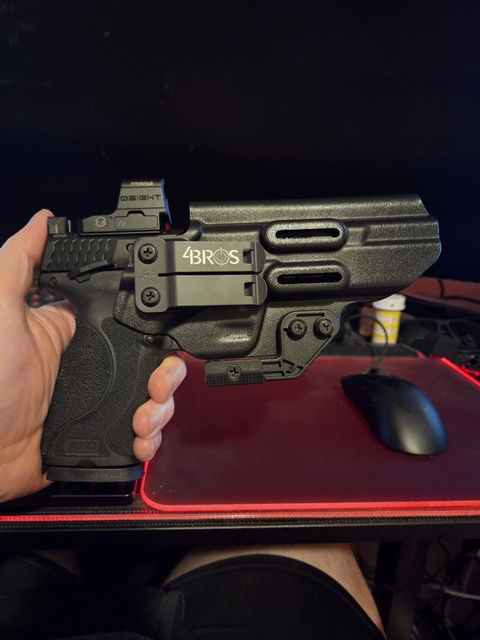
The belt loop attachment is painful, it digs into me. I would not recommend this attachment.
Solid fit. Good, and adjustable, retention.
It got here quickly and was a perfect fit!

Your Satisfaction, Our Priority: At Four Brothers Inc., customer satisfaction is at...
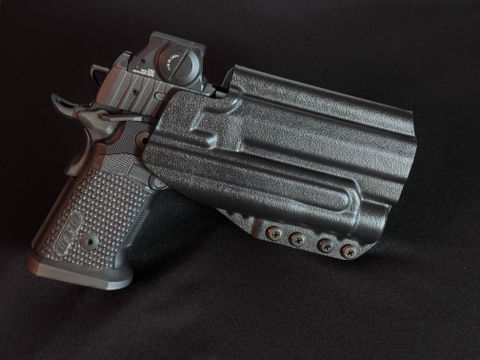
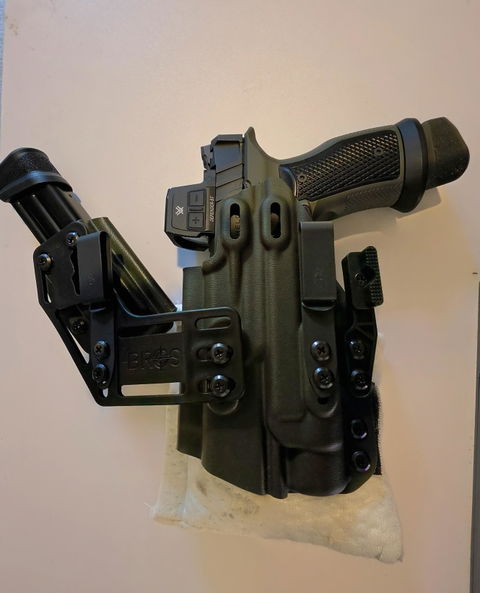
This holster is awesome! Not many options for Icarus precision customizable side cars out there, had never heard of this company prior! Man am I impressed by the overall quality of this holster! Far more adjustable than anything else I’ve tried in this style(Tier1, Trex, LAS). I’m still adjusting to exactly how I like it about 2 weeks in. Only complaint I found is my optic (Swampfox Sentinel 2) did not fit and I did have to remove material around the optic to make it compatible. I know this isn’t a common optic so I wasn’t worried about it at all! Highly recommend you go buy this one
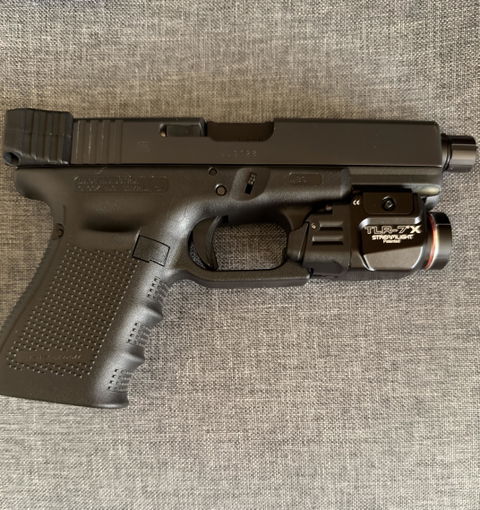
The IWB holster is a perfect fit for my Glock 19 generation four that is equipped with a TLR7 X flashlight. The quality of the material used in constructing the holster is outstanding.
The wedge works. The wedge definitely helped me conceal better. Durable and lightweight.
Great product. Light weight and durable. Fast shipping no delivery issues.
Love this little holster. The perfect size for this BG 2.0 carry comp. Weighs hardly anything at all but full trigger coverage and fits perfectly in waistband without added bulk. 4Bros does it again!!
Very well made holster. The holster wears great ,and the clips definitely make sure the holster is secured.
Retention is pretty good, nice that it's adjustable. Fits well on a normal belt and a duty belt. I wasn't sure what to expect with the duck camo but it looks great!
Happy with the purchase especially since holsters for g20 w/ light aren't as common especially for a reasonable price.
Only thing I would recommend is to put a picture of your prints so people know what to expect.
Will definitely keep 4bros in mind for my next holster.
I purchased both the IWB and over holster and both seem to function great. Initially, there where some problems with the kydex mold/shape, but brothers updated the mold in the time span of jist a week to get a while new fit and proper locking in of the firearm. Great holsters and great customer service.
Thank you for making this holster, it's the exact holster I had been looking for. I researched for quite a while for a solid, well made OWB holster that would fit the different situations I would need it for. Like I said in the Title, it's perfect!
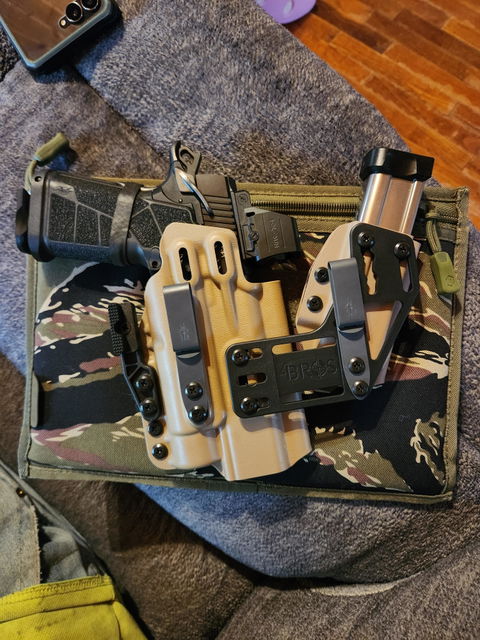
I also added a magazine holder which like the holster, is very well made.
I appreciate your company's efforts in the design and quality of your products. I wouldn't settle for anything less. For those that are looking for quality holsters and accessories, you're in the right spot.
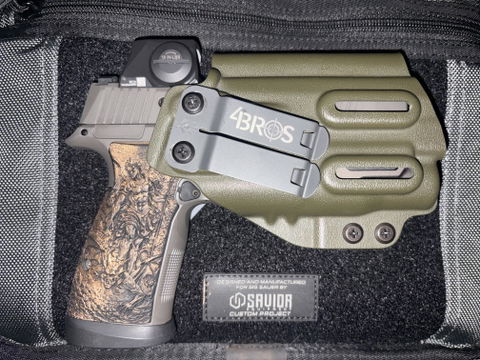
I was having trouble finding a holster to fit my S&W Performance Center 10mm. Not only does this one fit perfectly, but it makes it conceal IWB with nothing more than a light t-shirt over it. It conceals as well as my 1911 even though it is a bigger gun. I am a big guy at 6-04, but having a gun this size conceal completely is amazing. This is my new winter EDC setup now since it will conceal in all cases except for tank top and shorts summer type clothing. Micro 9mm for that.
The clip grips my belt securely so there is no accidental pulling holster along with gun that some cheaper options have issues with.
This was spendy compared to other kydex options but the quality and value is there, especially if you can't find a solution for your gun like I was having issues with.
Absolutely amazing fit, finish and function! 4bros always knocks it out of the park and customer service is always top notch! Streamline and super fast delivery as well. 10/10 will recommend to friends , family and anyone who owns a pistol. Multiple orders from them now and love every holster ive got from them ! Keep up the great work 4bros!
Wide, soft (but not too soft), comfortable and has a great hold. The provided hook and loop Velcro is very wide covering a large surface and easy to trim for an exact fit. I would recommend this to anyone on the fence. Makes all the difference when carrying daily like I do. Should’ve bought Two for when this one wears out some day. It is built well enough that I don’t believe I’ll see that day anytime soon.
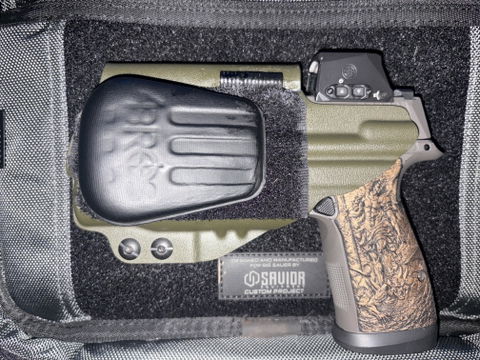
Pros: Material is a sturdy kydex material. The edges are smooth and not sharp. Utiliclip is able to cant and mounts high enough on the holster to let the pistol sit deeper into your waistline, allowing the grip to ride just above the belt line. Similar to a Fatboy holster. Retention on the light is tight and adjustable. Very few holster makers offer support for the Sig foxtrot2r. This one does offer support and does it right. With the right belt and a soft wedge you’ll forget you’re wearing it.
Cons: Does not offer Magnetac options for Romeo x optic. No option for a closed bottom on holster.
Overall a very nicely made holster. I can’t really hold it against them for not having the Magnetac option. Almost no manufacturers have it. Even as a stand alone item as an add on with Magnetac would be amazing. Almost gave 4 stars due to the lack of Magnetac but to be fair I really couldn’t. This really is a solid holster that is made well and the price is really fair considering I’ve paid more for less. I’d recommend this holster to anyone looking for great quality at an affordable price.
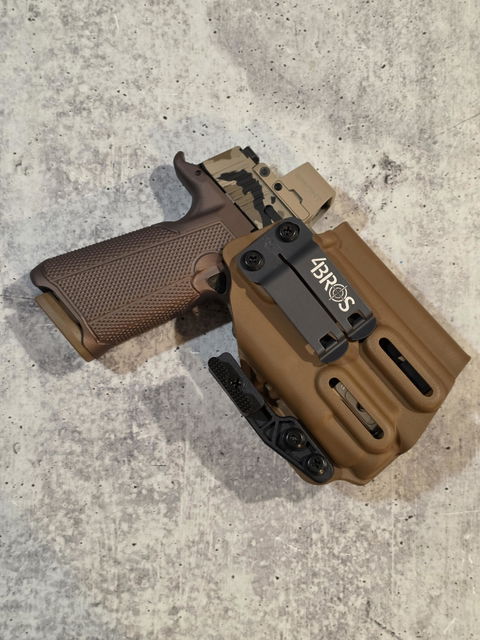
The perfect holster for my Icarus Precision 311 setup. Fit and function are great. Very high quality holster as with all my Four Bros holsters.
Freaking love this setup. I thought being a big guy i would need the dadbod. Na this works great. Im running the echelon sharps bros frame and it fits snug as a bug in a rug. Very happy with the adjustability.