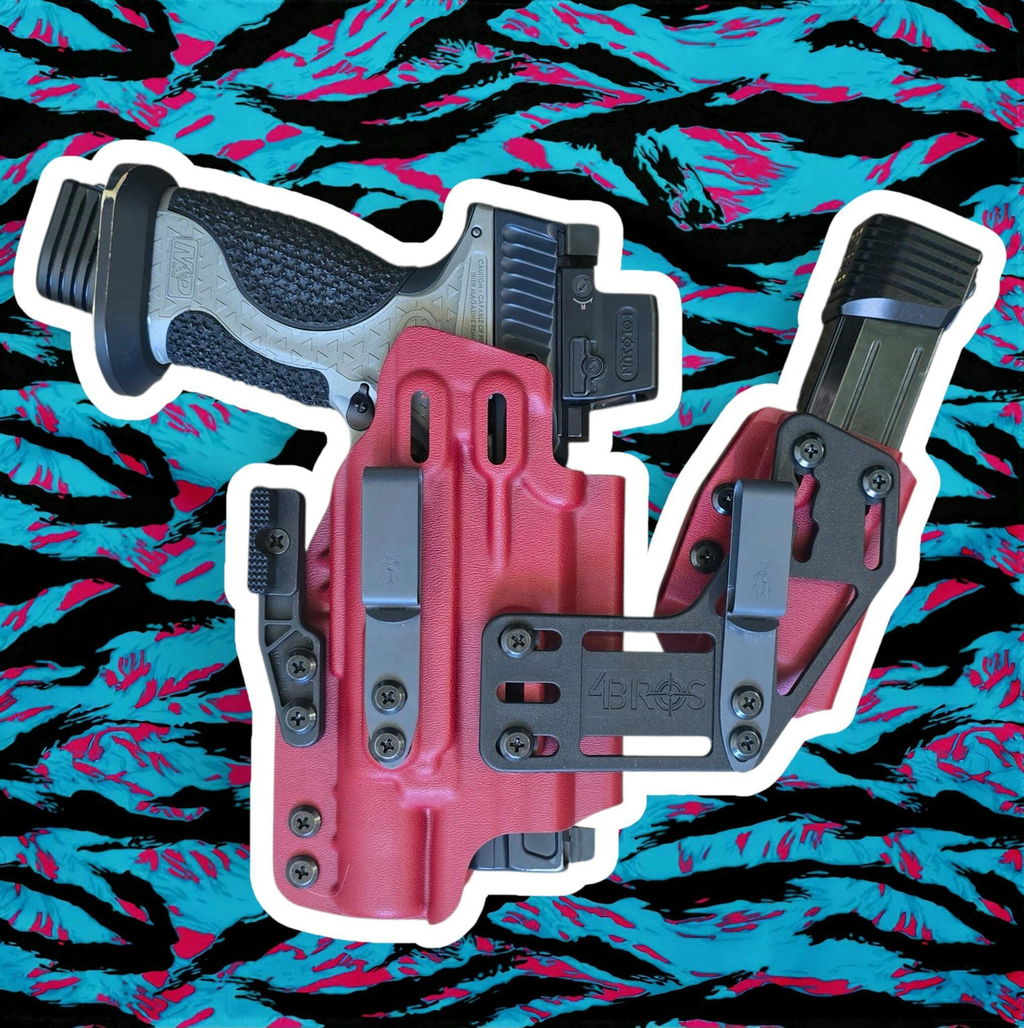

What Are The Best Concealed Carry Positions for Women vs. Men?
Concealed carry isn’t one-size-fits-all, and it’s not just about preference. The same holster position that feels effortless for one person can be uncomfortable, hard to conceal, or inconsistent for someone else.
A big reason is simple anatomy. Women and men often have different hip structures, waist-to-hip ratios, torso lengths, and typical clothing cuts, all of which can change how a firearm sits, how it prints, and how easy it is to access safely.
Our guide breaks down the most common concealed carry positions and explains which ones tend to work best for women versus men, along with the real factors that matter more than gender alone.

Start With What “Best” Actually Means
The best concealed carry position is the one that gives you three things at the same time:
- reliable concealment,
- consistent access,
- and comfort you can maintain all day.
If one of those fails, the position usually falls apart in real life.
A setup that hides well but is miserable to wear won’t last. A setup that feels great but prints constantly is going to force compromises in clothing and behavior. And a setup that’s hard to access consistently is not a serious option.
The goal is to achieve a carry position that you can repeat the same way, every day, without having to constantly adjust it.
Why Carry Positions Often Feel Different for Women and Men
Many men have a straighter waistline with less hip flare, which can make traditional strong-side carry feel stable and predictable.
Many women have more pronounced hips and a higher waist-to-hip curve, which can cause the grip to tilt outward or the holster to shift if the belt line and holster design do not match the body’s contour.
Clothing also plays a major role. Men’s pants typically have a more consistent rise and belt structure, while women’s clothing varies widely in rise height, waistband stiffness, and fit through the hips. Even when two people choose the same holster and position, differences in clothing construction can completely change how well it conceals.

Appendix Carry
Appendix carry (front of the body, typically around the 12:30–2:00 area for right-handed carriers) is popular because it can offer strong concealment and consistent access, especially with the right holster features.
- For many men, appendix carry works well because the front waistband area is often flatter and easier to stabilize with a belt.
- For many women, appendix carry can still work, but the comfort and concealment often depend on waistband height and how the holster rides relative to the hip curve. A higher-rise waistband can help by providing more structure and a more stable mounting point, while lower-rise waistbands can make the setup feel crowded or inconsistent.
Appendix carry also tends to be more sensitive to firearm size. Smaller, slimmer setups are usually easier to conceal and to wear comfortably across a wider range of body types.
Strong-Side Hip Carry
Strong-side hip carry (often around 3:00–4:00 for right-handed carriers) is one of the most common carry positions because it can feel natural when standing and walking.
- This position often works well for men because the firearm can sit close to the body without the grip being pushed outward by the hip line.
- For women, strong-side can be excellent too, but the hip curve can sometimes create outward pressure that makes the grip print more, especially with fitted tops or thinner materials. Adjusting ride height and cant, and using a holster designed to pull the grip into the body, can be the difference between “this works” and “this prints all day.”
Strong-side hip carry is also heavily influenced by lifestyle. If you sit frequently, drive often, or wear fitted waistbands, you may find strong-side needs more dialing in than you expected.
Behind-The-Hip Carry
Behind-the-hip carry (often around 4:30–5:00) is sometimes chosen because it can reduce printing in the front and feel more hidden under certain tops.
- For some men, it can be concealed well under loose shirts or jackets.
- For some women, it can also work well because the curve of the lower back and hip can help break up outlines under longer tops.
That said, it’s a position that can become uncomfortable when sitting for long periods, and it can be sensitive to belt stability. If the holster shifts even slightly, the concealment and consistency can change quickly.
If you spend a lot of time seated, you’ll want to evaluate this position honestly before committing to it long term.
Belly Band And Off-Body Carry
Some women explore belly bands because they work with leggings, dresses, and outfits without a traditional belt. Some men use them for athletic wear as well. The tradeoff is that belly bands can vary a lot in structure and retention, and comfort can change depending on heat, movement, and the specific garment underneath.
Off-body carry (bags, purses, packs) is sometimes considered for wardrobe reasons, but it introduces a different set of risks and requires a higher standard of consistency and control. If the bag comes off your body, the firearm goes with it, which is why many people treat off-body as a last-resort option rather than a primary method.

The Four Factors That Matter More Than Gender
If you want to choose the best concealed carry position quickly, focus on these four variables.
1. Body Shape And Where Your Waistband Sits
The same position can work differently depending on torso length, hip structure, and where your pants naturally sit.
2. Your Most Common Clothing
If your daily wardrobe is fitted, lightweight, or varies in waistband style, you need a position and holster setup that can adapt without forcing constant changes.
3. Firearm Size And Grip Length
Grip length is often the biggest driver of printing. Many people blame the position when the actual issue is the firearm footprint on their body and wardrobe.
4. Holster Design And Adjustability
Ride height, cant, and how tightly the holster holds the firearm all impact concealment and comfort. A good holster can make an “almost works” position become an everyday position.

The Simplest Way To Find Your Best Position
If you’re deciding between positions, do not overthink it on day one.
Start by testing two: appendix and strong-side. Wear each around the house during normal movement, then sit, drive, bend, and do the things you actually do every day. The winner is the position that stays stable, stays concealed, and does not demand constant adjustment.
Once you’ve chosen a position, the next step is selecting a holster built to support it. That’s where fitment matters. A holster has to match your firearm, your light (if you run one), and your carry style.
How 4Bros Helps You Dial It In Faster
At 4Bros, the goal is simple. We want to help you get a holster setup that feels secure, consistent, and built for daily carry.
Whether you carry appendix or strong-side, you can use the Holster Finder to match your firearm model, weapon light, and carry style so you’re not guessing.
If you’re still narrowing down what position works best for your body and clothing, starting with an IWB holster designed for stability and a predictable draw is the fastest path to a setup you will actually stick with.