


Understanding Holster Fit and Firearm Care - A Four Brothers Guide
Firearms and accessories are tools of survival. They deserve to be treated with respect, handled safely, and carried in equipment built to keep them where they belong. Your safety, and the safety of the people around you, is the standard every piece of our gear is measured against.
The intent of this article is to clarify what our products are designed to do, what a properly fitting retention holster will look like in real-world use, and what you can expect when you carry one of our holsters day in and day out.
Concealed carry is not a static activity. It involves movement, friction, weather, dust, sweat, sitting in vehicles, drawing under stress, and re-holstering thousands of times throughout a firearm's life. A holster built to perform in those conditions has to do more than hold the firearm. It has to hold the firearm the same way every time, in every position, regardless of what the carrier is doing.
That requirement shapes every design decision behind our holsters, and it explains the trade-offs that come with serious retention.
What Retention Requires
A holster that holds your firearm securely is not a loose holster. It cannot be. To deliver consistent retention through walking, running, vehicle entries, physical confrontations, and everyday motion, the holster has to make contact with the firearm at multiple points along the slide, trigger guard, and, when applicable, the weapon-mounted light.
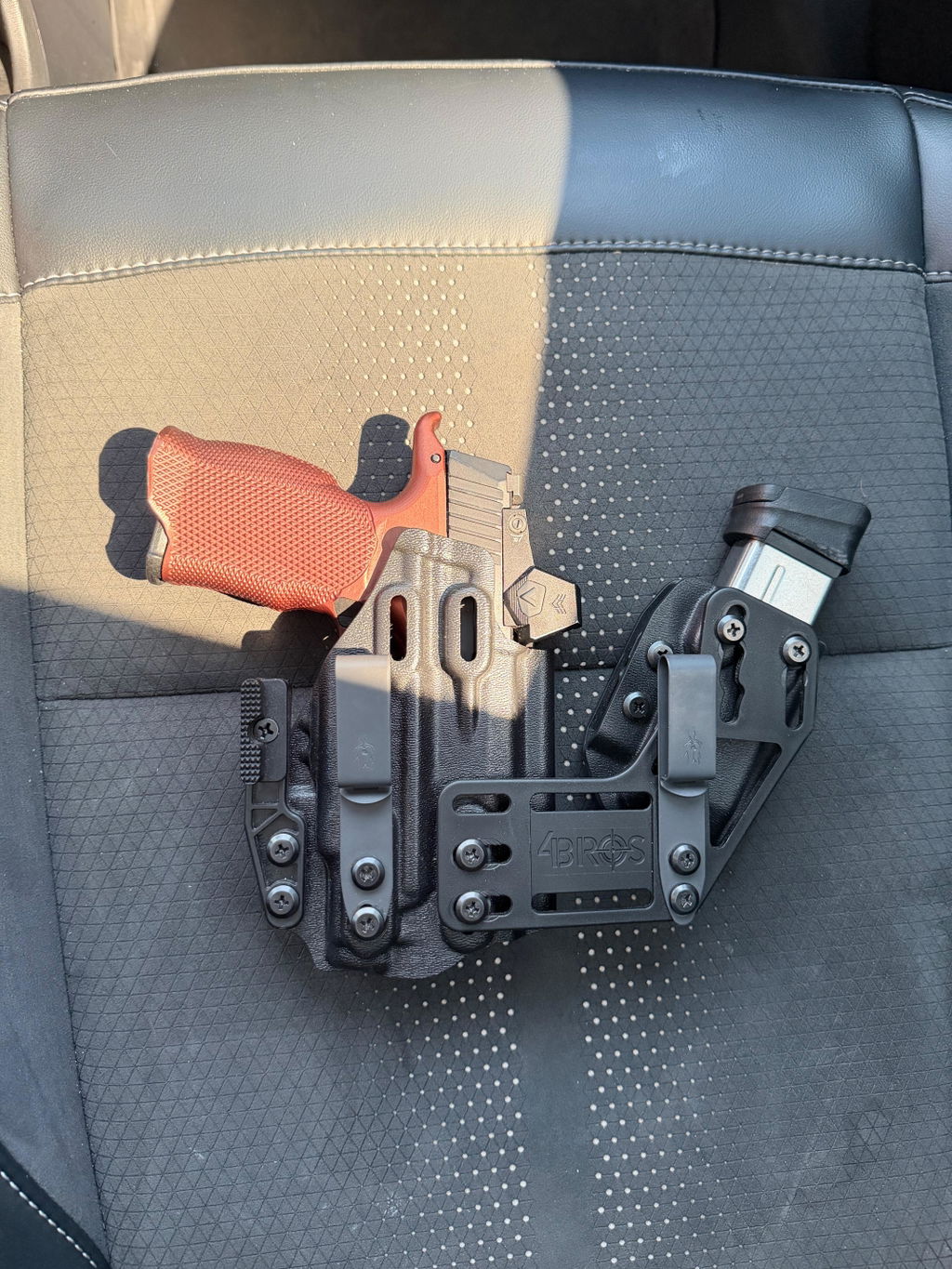
That multi-point contact is what creates the friction and mechanical fit that keep the pistol in place. A well-designed Kydex holster contacts the pistol or pistol and light combination in several areas to establish a good fit without allowing the pistol to move around in the holster and establishes retention on the weapon. Without that contact, you do not have retention. You have storage.
This is the trade-off at the center of every retention holster on the market. The same contact that keeps your firearm secure also touches the finish. There is no version of a high-retention holster that achieves both perfect security and zero contact with the slide. Anyone who tells you otherwise is selling you something that will not perform when you need it to.
Where Wear Marks Typically Appear
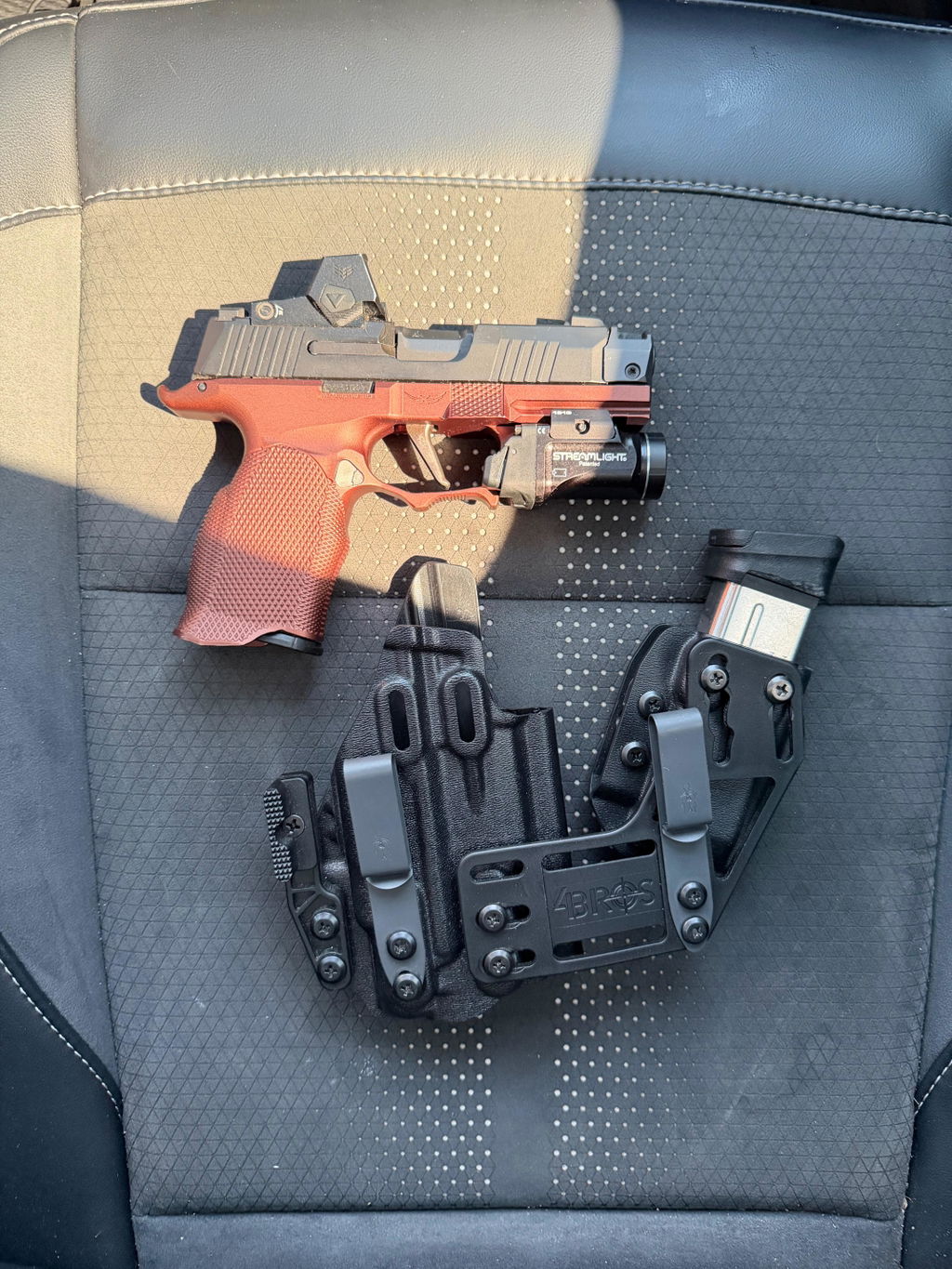
Because of where the retention forces sit, wear marks tend to show up in predictable places. On most pistols carried in our holsters, you can expect light marking in the following areas:
- The top of the slide on each side of the sight, where the holster mouth makes contact during draw and re-holster
- Each side of the slide, where the body of the holster maintains the friction fit
- The weapon mounted light, if your setup includes one, since the light is part of the retention geometry
These marks are cosmetic. They have no effect on the function, accuracy, or reliability of your firearm. Across the concealed carry and shooting community, this kind of wear is considered normal and expected for any pistol carried in a retention holster. As one long-time carrier put it on Defensive Carry, no matter what type of holster you have, it will wear off the bluing in spots, and it is not just drawing that wears the bluing, it is also caused by simply carrying the gun over time. Defensive Carry
Does Finish Type Matter More Than Holster Material?
The most common assumption is that Kydex wears finishes faster than leather. The reality is more nuanced. The finish on your firearm is a bigger variable than the holster material itself.
Hard finishes like Nitron, Cerakote, and Tenifer hold up well to consistent holster contact. Softer finishes, including some bluing applications and certain factory coatings, will mark more readily. Wear still occurs on stainless, it just does not show as much, and it is most noticeable on highly polished blued finishes where the blue is particularly deep. If your firearm has a softer finish, expect the holster to mark or scratch that finish more than it would a hard-coated pistol. This is a function of the finish, not a defect in the holster.
The simple truth is, it does not matter what material your holster is made of; the more you draw and re-holster, the more likely you are to cause some wear and tear on your handgun.

How to Minimize Holster Wear
There are practical steps that reduce wear without compromising the retention you are carrying the holster for in the first place.
Keep the holster clean. Dust, sand, grit, and pocket lint act like fine sandpaper between the holster shell and the firearm. A holster carried daily picks up debris quickly, and that debris is what turns normal contact into accelerated wear. A quick wipe down on a regular basis, including the interior of the shell and the slide of the firearm, is the single most effective thing you can do. Many experienced carriers also wipe the slide and the inside of the holster with a silicone cloth, which adds a thin protective layer and makes the draw smoother.
Inspect the holster periodically. Check for embedded debris, cracks, worn edges, and screws that may have backed out. Adjust retention thoughtfully. A holster tuned too tight will create more friction than necessary, and one tuned too loose will allow the firearm to shift, which produces a different kind of wear. The right adjustment is the lightest retention that still holds the firearm securely through aggressive movement.
Store the firearm properly when it is not being carried. Leaving a firearm in any holster for extended idle periods, particularly in humid conditions, can trap moisture and introduce corrosion. Even Kydex can hold moisture against the slide over time.
If finish preservation is more important to you than carry readiness, the honest recommendation is that the firearm belongs in a lockable case or a gun safe rather than in a daily carry holster. A carry pistol is a working tool, and a working tool shows the marks of being used.
Will a Kydex Retention Holster Scratch My Gun?
Some marking is normal on any firearm carried in a retention holster. The marks typically appear near the sights, along the sides of the slide, and on a weapon mounted light if equipped. The marking is cosmetic and does not affect function.
Why Does My Holster Touch My Firearm in So Many Places?
Multi-point contact is what creates retention. A holster that only touches the firearm in one or two spots cannot hold it securely through running, vehicle entries, physical contact, or aggressive movement. Multiple contact zones are what keep the firearm where you put it.
Does Kydex Wear Pistol Finishes Faster Than Leather?
Both materials produce wear marks over time. The finish on the firearm matters more than the holster material. Harder finishes resist marking. Softer finishes show wear sooner, regardless of whether the holster is leather, Kydex, or hybrid.
How Do I Reduce Wear on My Firearm Finish?
Keep the holster clean and free of dust and debris, adjust retention to the lightest setting that still holds the firearm securely, inspect the holster regularly, and consider wiping the slide and interior of the shell with a silicone cloth. For firearms you want to preserve cosmetically, store them in a case or safe rather than in a holster.
Are Holster Wear Marks a Sign of a Defect?
No. Light marking in the contact zones is expected on any firearm carried in a properly fitted retention holster. It is the cost of carrying a tool that has to perform under pressure.
Does Holster Wear Affect Resale Value?
Cosmetic wear can affect the resale value of certain collectible firearms. For a working concealed carry pistol, most buyers understand that visible wear reflects use, training, and a firearm that has actually been carried.
1 comment
I didn’t receive the holster yet but I will keep an eye out for that. Thank you.