
The History of the Smith & Wesson 10mm: From FBI Adoption to Modern Carry Power
The 10mm Auto has one of the strangest trajectories in American firearms history. Adopted by the FBI after one of the most studied gunfights in law enforcement history, then quietly shelved within a decade, then rebuilt into one of the most capable carry cartridges on the market.
Understanding why that happened tells you something useful about what the cartridge does well and where it belongs today.
Where Did the 10mm Cartridge Come From?
In the early 1980s, American shooters were stuck between two imperfect options. The 9mm was controllable but underpowered in serious threat scenarios. The .45 ACP hit hard but shed velocity fast. Neither one felt like enough.
The 10mm Auto changed that equation. Developed through collaboration between firearms theorist Jeff Cooper and introduced commercially by Norma, the cartridge delivered high velocity and high energy, with a trajectory flat enough to shoot with precision at distance. In a semi-automatic platform, that combination hadn't existed before.
On paper, it was everything a defensive cartridge should be.

What Did the FBI Miami Shootout Have to Do With It?
On April 11, 1986, eight FBI agents attempted to arrest two heavily armed bank robbery suspects in a Miami suburb. The gunfight lasted only minutes and produced casualties on the agents' side: two dead, five wounded.
The incident became one of the most dissected law enforcement engagements in American history. One detail in particular drove the post-event analysis. A 9mm round struck one of the suspects early in the fight, producing a wound that was ultimately fatal but failed to stop him immediately. He continued shooting for several minutes. Two agents died in that window.
The FBI's conclusion was clear: their ammunition did not reliably reach vital structures through common obstacles, at common angles, under real conditions. Penetration was the gap.
The bureau launched a rigorous ballistic testing program focused on three requirements: consistent penetration through barriers, reliable terminal performance regardless of angle, and enough energy to reach vital organs at realistic distances. The 10mm Auto performed better than any other candidate.
Why Did the FBI Drop the 10mm?
To support FBI adoption, Smith & Wesson developed the Model 1076. Built from stainless steel, double-action, and engineered to handle full-power 10mm loads without issue, it was one of the most robust duty pistols the company had ever produced. The 1006 and 1026 followed, each sharing the same overbuilt DNA.
The cartridge worked. The shooters were the problem.
The full-power 10mm load generated sharp, fast recoil that disrupted follow-up shot placement for agents who hadn't spent significant time with the platform. The grip circumference required to house the cartridge was large enough to compromise control for a portion of the workforce. Qualification scores dropped. Accelerated pressure caused faster-than-expected wear on the pistols themselves.
The FBI's solution was pragmatic but telling. They reduced the powder charge, dropping the load's velocity, producing what became known informally as "10mm Lite." The reduced load addressed the recoil issue, but it also raised an obvious question: if you needed to soften the cartridge to make it workable, why build around the full-size case at all?
That question produced the .40 S&W. Smith & Wesson and Winchester collaborated to build a shorter cartridge that replicated the FBI's reduced 10mm rifle performance in a frame sized closer to a 9mm platform. Law enforcement adopted it widely. By the mid-1990s, the .40 had become the dominant duty caliber and the 10mm had retreated to a narrow audience of enthusiasts, hunters, and long-range handgun shooters.

Why Did the 10mm Come Back?
The cartridge's resurgence in the 2010s was driven by a set of practical changes that, together, solved the original problems.
- Ammunition development closed the gap. Modern projectile engineering enabled the 10mm to achieve consistent expansion across a broader velocity range, better barrier performance, and controlled penetration without requiring full-power loads. Shooters could choose between maximum-performance hunting loads and reduced-recoil defensive rounds from the same platform. That flexibility hadn't existed in 1986.
- Modern pistol design addressed the ergonomic failures. The Smith & Wesson M&P 10mm M2.0 clearly illustrates the shift. Interchangeable backstraps allow the grip to fit a wider range of hand sizes. Aggressive texture improves purchase under recoil. A dual recoil spring system distributes energy more efficiently, reducing felt snap. Higher capacity and optics-ready configurations brought the platform in line with what shooters expected from a modern duty pistol. The guns that killed the 10mm's FBI career no longer exist in the current lineup.
- The decline of the .40 S&W reopened the market. As law enforcement agencies returned to 9mm following improvements in 9mm defensive ammunition, the .40 lost its institutional footing. That left a gap at the top of the semi-automatic performance range. The 10mm filled it without compromise.
- The use case evolved. A growing number of shooters want a single handgun that handles urban carry, range training, and backcountry defense against large animals. Few cartridges span that range. The 10mm does.

What Does the 10mm Offer That Other Calibers Don't?
Compared to 9mm, the 10mm produces meaningfully higher muzzle energy and deeper penetration. Compared to .45 ACP, it carries more rounds and shoots flatter. Those advantages matter most in three situations: barrier-penetration scenarios where intermediate obstacles complicate shot placement, outdoor environments where large predators require deeper wound channels, and duty applications where maximum performance from a semi-automatic pistol is the priority.
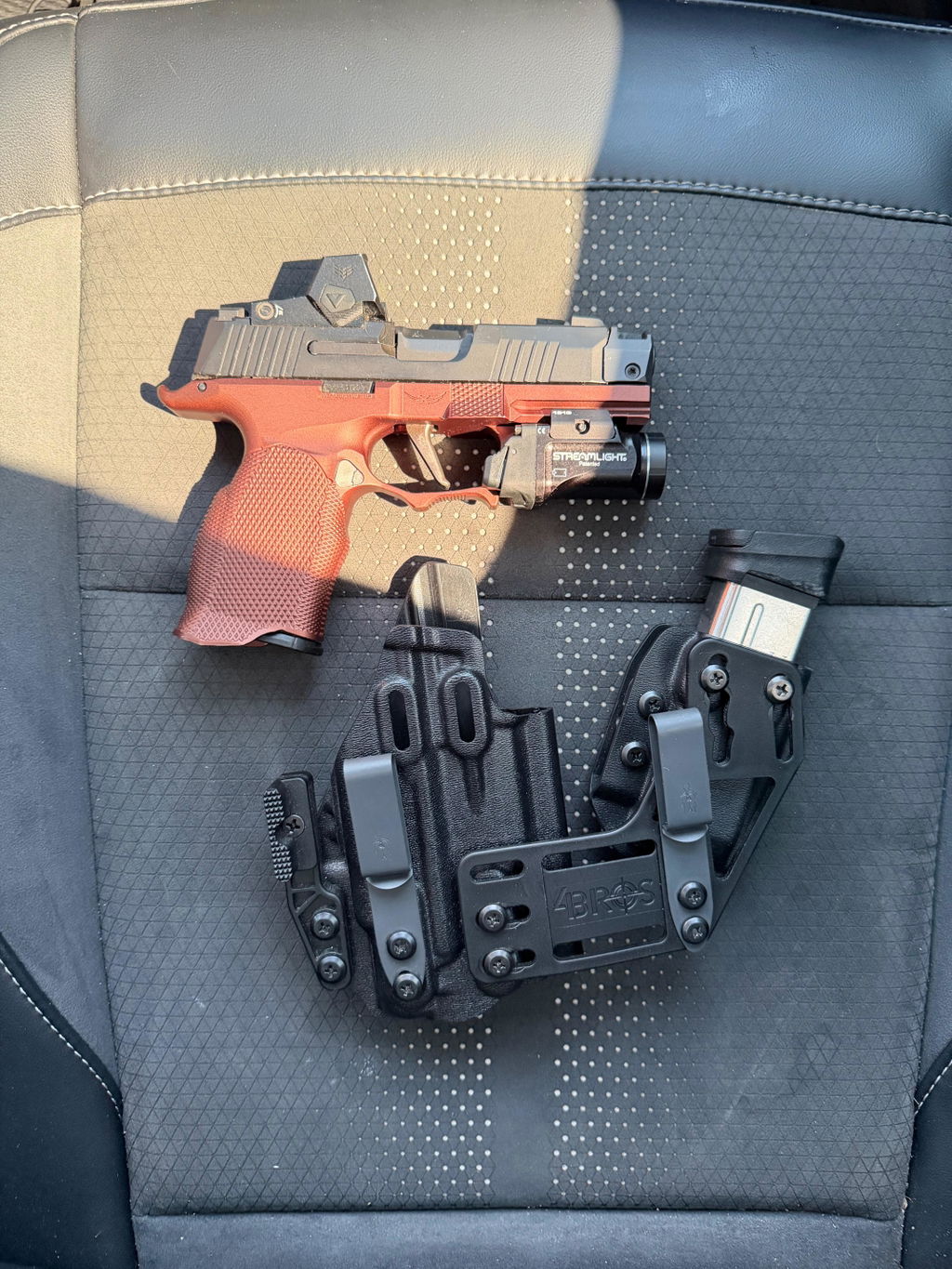
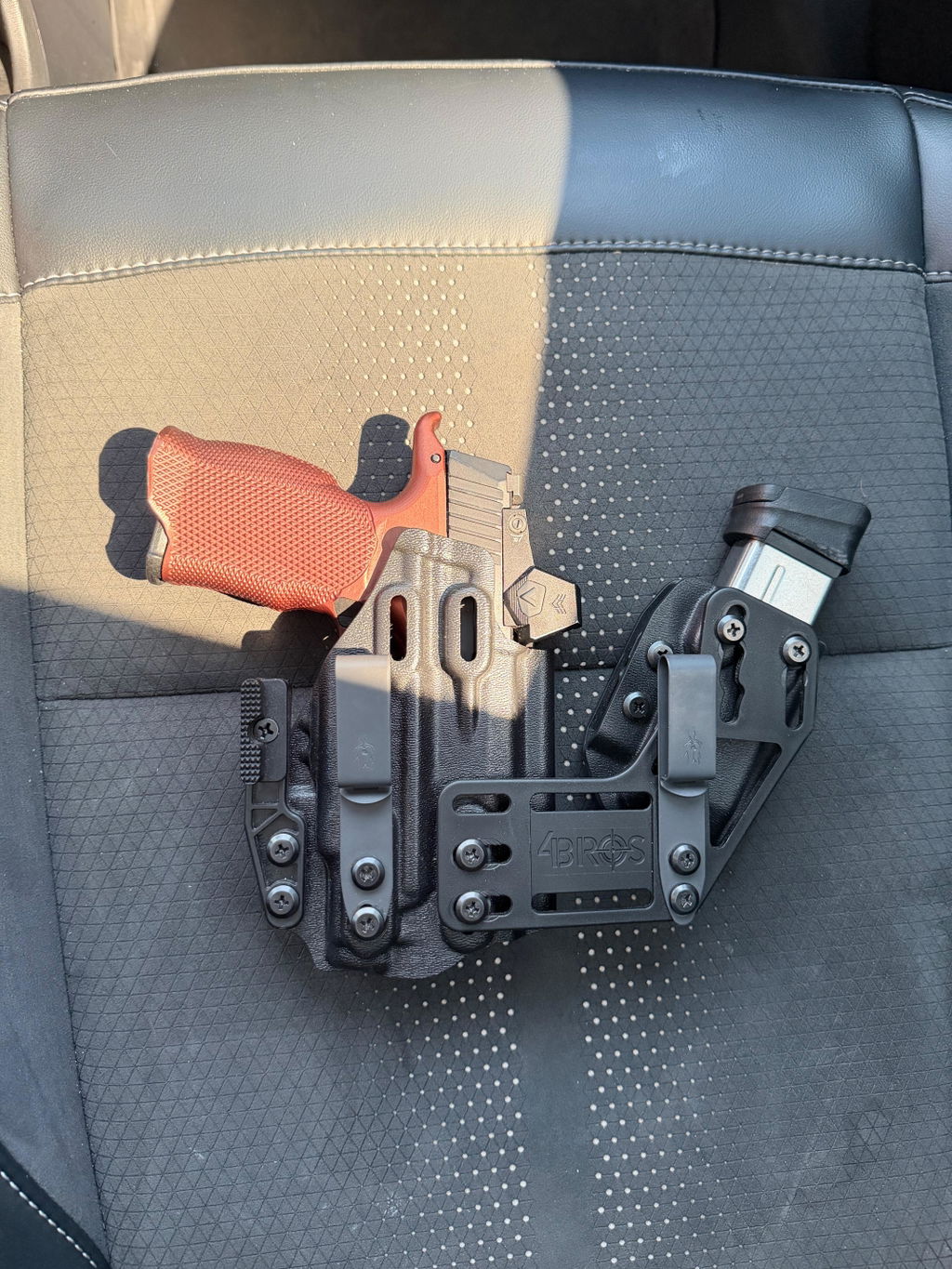
The cartridge also demands more from the gear around it. Holsters built for 10mm platforms require reinforced construction, stronger retention systems (particularly for light-bearing setups), and materials rated for the added weight of larger pistols. That demand has driven real development in the carry accessories market.
Shooters who run 10mm generally do so deliberately. They train specifically for the platform, understand its performance envelope, and want a margin of capability beyond minimum thresholds. That intentionality tends to produce more confident use under pressure.
So, What Happened to the 10mm?
The 10mm Auto spent roughly two decades in the background after its FBI moment. It surfaced early because it was the best ballistic answer to a documented real-world failure. It faded because the institutional infrastructure around it- the training programs, grip sizing, and maintenance cycles couldn't support what the cartridge demanded.
That gap between ballistic capability and practical manageability has now closed. The ammunition is better. The platforms are better. The shooter base is more experienced.
The 10mm that exists today is the cartridge that the 10mm of 1986 was trying to be.

Your 10mm Deserves a Holster Built for it
Running a full-size 10mm means carrying more power, more weight, and more demand on every piece of gear attached to that gun. 4Bros builds Kydex IWB and OWB holsters for the 10MM pistols shooters run. Reinforced construction, precise fitment, and light-bearing options are designed to meet the platform's requirements. Typically, every holster ships from our shop in the USA within 1 to 3 business days.
Find Your 10mm Holster at 4Bros