What Holster Fits My Gun? Compatibility Guide for Pistols, Lights, and Optics
Jason PineShare
Quick answer:
The holster that fits your gun depends on three things:
- The exact pistol model
- Whether the pistol has a weapon-mounted light
- The type of carry (IWB, OWB, or Duty)
Light-bearing holsters typically provide retention using the weapon light rather than the firearm frame.
Choosing the right holster is not as simple as matching a brand name to a pistol. The correct holster depends on three primary fitment factors: the exact firearm model, whether the pistol is equipped with a weapon-mounted light, and the carry style you want to use.
If you are asking, “What holster fits my gun?”, this guide will help you understand how holster compatibility works so you can choose the right setup the first time.
Short Answer: What Holster Fits My Gun?
The right holster is determined by:
- Your exact pistol model
- Whether you are running a weapon light
- The specific light model
- Whether you have a red dot optic
- The carry style you want, such as IWB, OWB, or Duty & Competition
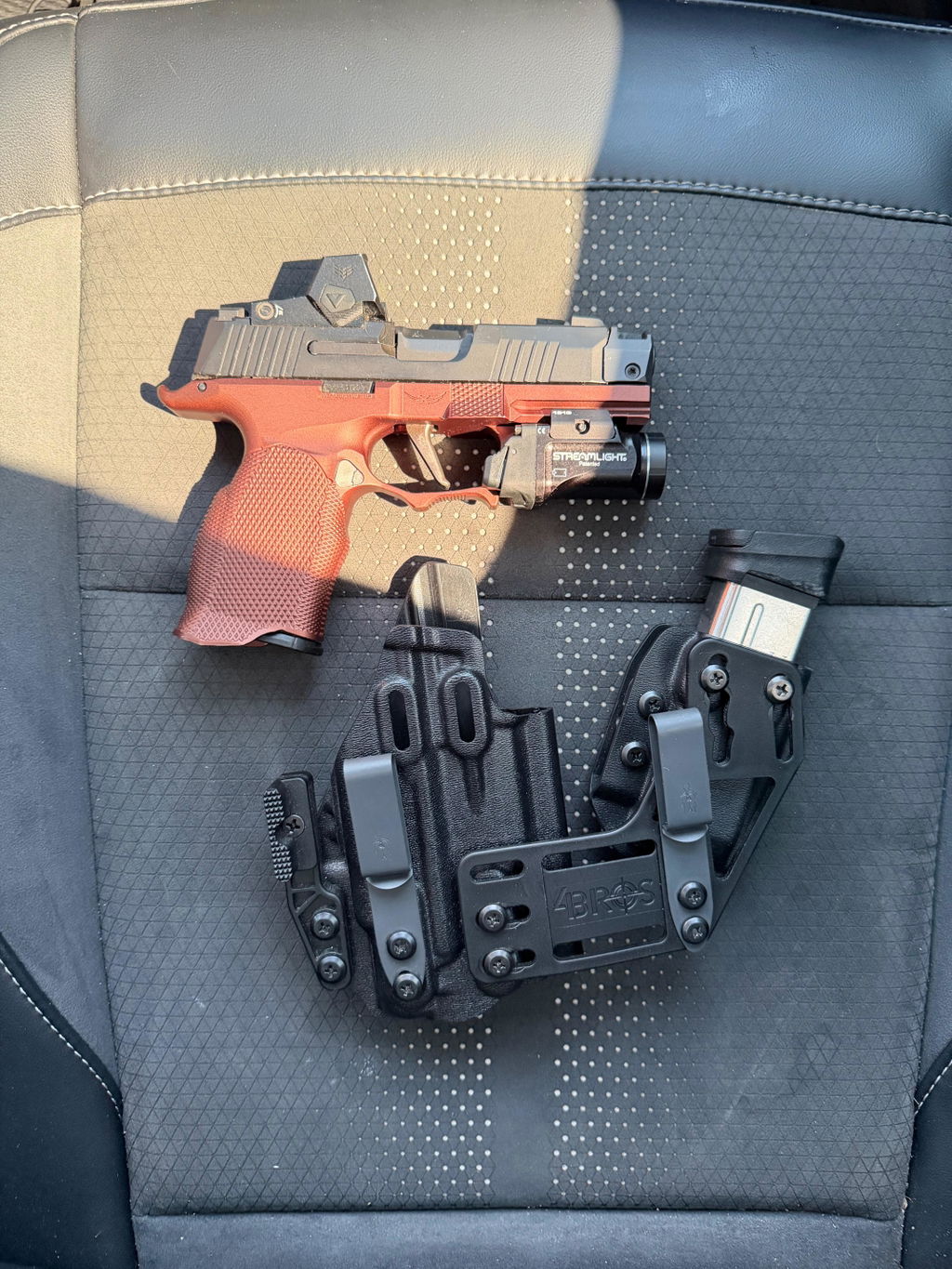
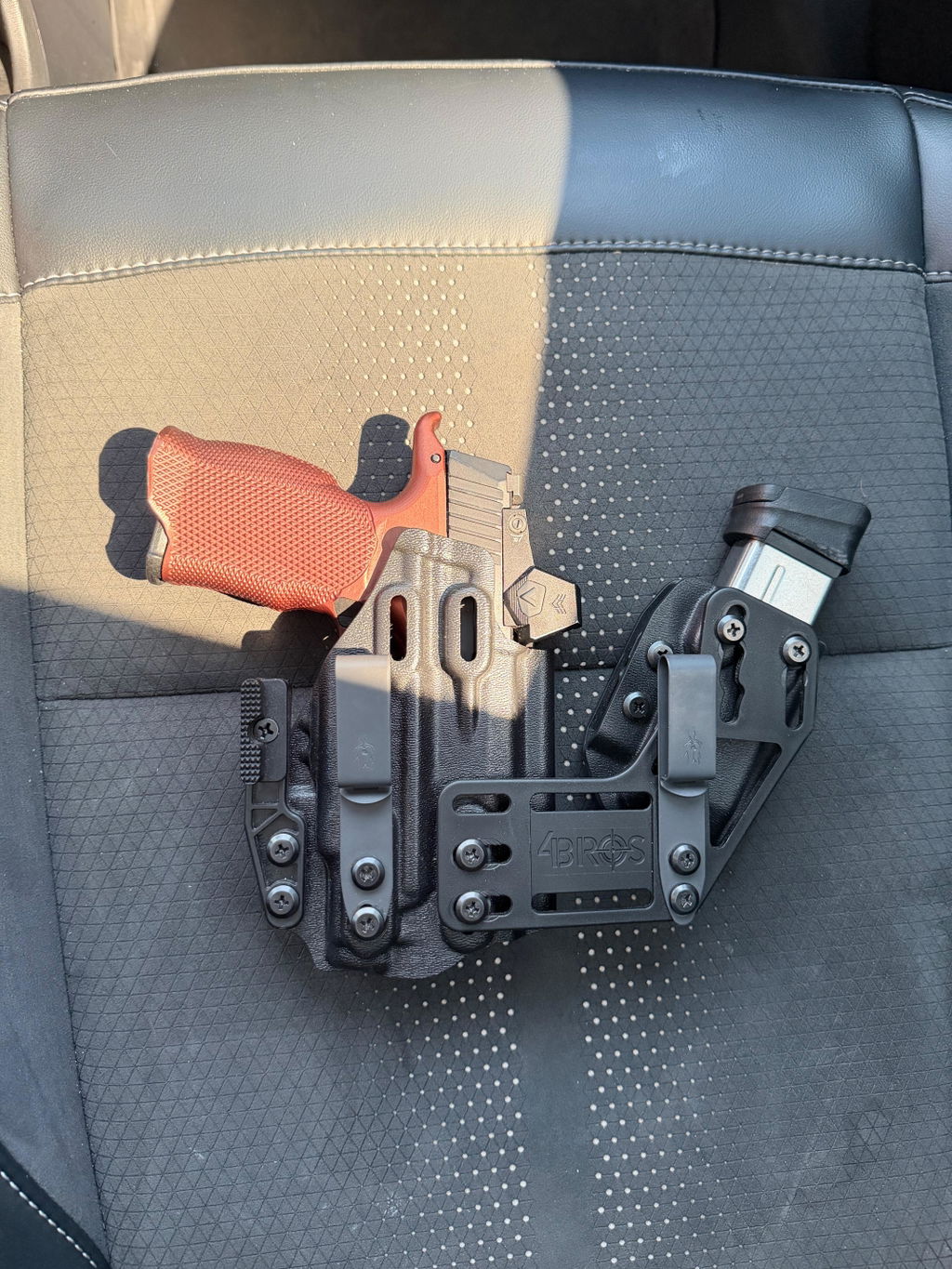
In many cases, the light model matters just as much as the pistol. For light-bearing holsters, the holster often retains on the light itself rather than the firearm frame. That means a pistol with a weapon light will usually require a dedicated light-bearing holster.
How Holster Compatibility Actually Works
When someone searches for the best holster for concealed carry or wants to know which holster fits a pistol with a light, there are a few critical compatibility rules to understand.
1. The Exact Firearm Model Matters
Not all pistols from the same manufacturer share the same holster fit. Even small differences in slide length, rail shape, trigger guard geometry, or frame dimensions can affect retention and fitment.
Examples of details that matter include:
- Standard model vs. compact model
- Long slide vs. short slide
- Factory frame vs. aftermarket grip module
- Standard dust cover vs. accessory rail
That is why it is important to match the holster to the exact pistol configuration, not just the brand name.
2. Weapon-Mounted Lights Change Everything
If your pistol has a weapon light, you typically need a light-bearing holster built for that exact light.
Common examples include:
- Streamlight TLR-7 A
- Streamlight TLR-7 X
- Streamlight TLR-7 HL-X
- Streamlight TLR-1 HL
- Surefire X300U-A / X300U-B
- Surefire X300T-A / X300T-B
- Surefire XC3
Important: A holster made for one light model may not fit another, even if the names are similar. For example, a holster designed for a TLR-7 A or TLR-7 X may not fit a TLR-7 HL-X because the light bezel dimensions differ.
3. Optics Usually Do Not Change Basic Holster Compatibility
Most modern holsters are designed to be red dot compatible, but it is still important to confirm that feature before buying. An optic cut allows the holster to clear popular pistol-mounted red dots without interfering with the draw.
In most cases, an optic will not change the base holster model the way a weapon light does, but you still want to make sure the holster is designed for optic clearance.
4. Carry Style Matters
The same pistol and light combination may be available in multiple holster styles depending on how you plan to carry.
- IWB Holster – Inside Waistband carry for concealed carry and everyday carry
- OWB Holster – Outside Waistband carry for range use, open carry where legal, or more comfortable belt-mounted carry
- Duty & Competition Holster – Outside Waistband light duty and competition use with mounting flexibility and fast access
Do Light-Bearing Holsters Retain on the Light?
In many modern designs, yes. Light-bearing holsters often retain on the weapon light rather than the pistol frame.
This is one of the most important concepts in holster fitment. If the retention system is built around the light, the pistol usually will not retain correctly without the light attached.
This is why a standard holster is not a substitute for a light-bearing holster, and why light model selection is so important when choosing a holster.
Can One Holster Fit Multiple Pistols?
Sometimes, but not always.
There are situations where a light-bearing holster can work with more than one pistol model when those pistols share compatible dimensions around the mounted light and trigger guard area. However, that should never be assumed without verified fitment testing.
Holster fitment should always be based on confirmed compatibility, not guesswork.
Most Common Holster Fitment Mistakes
Buying Based Only on the Gun Brand
A Sig Sauer, Springfield Armory, Glock, Staccato, or Smith & Wesson label alone is not enough. You need the exact model and, ideally, the exact configuration.
Ignoring the Weapon Light Model
This is one of the biggest mistakes buyers make. A holster for one light model is not automatically compatible with another.
Assuming All TLR-7 Holsters Are the Same
The Streamlight TLR-7 family includes multiple models. The TLR-7 Sub, TLR-7 X, and TLR-7 HL-X are not all interchangeable in holster fitment.
Assuming a Light-Bearing Holster Works Without the Light
If the holster is designed to retain on the light, removing the light changes the retention relationship and the holster should not be used that way.
Forgetting About Aftermarket Grip Modules
Aftermarket grip modules and frame modifications can change fitment. When in doubt, verify the exact setup before ordering.
How to Choose the Right Holster for Your Setup
- Identify the exact pistol model
- Identify the exact weapon light model, if any
- Confirm whether you need optic compatibility
- Choose your carry style: IWB, OWB, or Duty & Competition
- Verify fitment on the product page or compatibility guide
If you already know your firearm and light setup, the fastest way to narrow down options is to use our Holster Finder.
Examples of Holster Compatibility Factors
Here are examples of the kinds of variables that affect fitment:
| Compatibility Factor | What to Verify | Why It Matters |
|---|---|---|
| Pistol Model | Exact make and model | Frame and slide dimensions affect retention and clearance |
| Weapon Light | Exact light brand and model | Light-bearing holsters are usually built around a specific light |
| Optic | Whether the holster is red dot compatible | Prevents interference with the draw |
| Carry Style | IWB, OWB, or Duty & Competition | Different use cases require different holster designs |
| Grip Module / Frame Modifications | Factory or aftermarket frame details | Modified frame geometry can affect fit |
What Type of Holster Should You Choose?
IWB Holsters
Inside Waistband holsters are a popular choice for concealed carry because they keep the pistol close to the body and reduce printing. They are commonly used for everyday carry setups and are available in both standard and light-bearing configurations.
OWB Holsters
Outside Waistband holsters are ideal for training, range use, open carry where legal, and users who prefer easier access and comfort. They can also be an excellent choice for certain concealment setups with the right cover garment.
Duty & Competition Holsters
Outside Waistband light duty & competition holsters are designed for speed, stability, and flexible mounting options. They are especially useful for shooters running larger pistols and weapon-mounted lights.
Why Confirmed Fitment Matters
A quality holster should provide:
- Secure retention
- Reliable draw consistency
- Proper trigger guard coverage
- Clearance for the optic and light, when applicable
- A stable carry position suited to the intended use
That only happens when the holster is designed for the exact firearm and accessory combination you are actually carrying.
Use Verified Holster Data, Not Guesswork
At Four Brothers Holsters, product fitment is based on the actual combination being developed, tested, and documented. That matters because modern pistols, lights, optics, and aftermarket components create a wide range of fitment variables.
When customers search for answers like “what holster fits my gun with a light?” or “do I need a special holster for a red dot pistol?”, the right answer depends on verified compatibility data.
Find the Right Holster Faster
If you are ready to find a holster for your setup, start with our Holster Finder to narrow down options by firearm, carry style, and supported configuration.
You can also browse our core carry categories here:
FAQ
What holster fits my gun?
The correct holster depends on your exact pistol model, whether you are running a weapon-mounted light, whether you need optic clearance, and the type of carry you want, such as IWB, OWB, or Duty & Competition.
Do I need a special holster for a pistol with a light?
Yes. A pistol with a weapon-mounted light typically requires a dedicated light-bearing holster designed for that exact light model.
Can I use a light-bearing holster without the light attached?
In most cases, no. Many light-bearing holsters retain on the light itself, so removing the light changes the way the holster retains the firearm.
Will one holster fit multiple pistols?
Sometimes, but it should never be assumed. Fitment should always be based on confirmed compatibility data for the specific pistol and accessory combination.
Does a red dot change which holster I need?
Usually not as much as a weapon light does, but you still need to confirm that the holster is cut for optic clearance.
What is the difference between IWB and OWB holsters?
IWB holsters are designed for Inside Waistband carry and are commonly used for concealed carry. OWB holsters are designed for Outside Waistband carry and are often preferred for training, range use, or easier access.
Why does the exact light model matter?
Different light models have different dimensions, and holster retention on light-bearing designs is often built around the exact light body. Even similar light names do not guarantee compatibility.
Final Thoughts
If you have ever wondered, “What holster fits my gun?”, the safest and smartest answer is this: match the holster to the exact pistol, exact light, and intended carry style.
That approach improves safety, retention, consistency, and overall performance. It also helps you avoid one of the most common mistakes in the holster world: assuming fitment instead of verifying it.
For confirmed options built around real-world compatibility data, start with the Four Brothers Holsters Holster Finder.
Fitment data in this guide is based on real pistol and weapon-light testing performed during holster mold development at Four Brothers Holsters in Logansport, Indiana.
About the Author
Jason Pine
President – Four Brothers Holsters
Jason Pine is the President of Four Brothers Holsters, a U.S.-based manufacturer specializing in precision-molded Kydex holsters for concealed carry, duty use, and competition. Based in Logansport, Indiana, Four Brothers Holsters designs and manufactures holsters in-house using CAD-driven mold development, real firearm testing, and weapon-light compatibility validation.
Jason and his team work directly with modern pistol platforms, weapon-mounted lights, optics-ready pistols, and aftermarket grip modules to ensure proper holster retention, clearance, and real-world usability. Their work focuses on helping shooters understand holster compatibility, especially with light-bearing holsters that secure the weapon using the light rather than the firearm frame.
Four Brothers Holsters supports a wide range of firearm platforms, including Sig Sauer, Staccato, Glock, Smith & Wesson, and Springfield Armory, along with popular weapon lights such as Streamlight TLR-7, TLR-1 HL, and Surefire X300 series.
Through product development, educational content, and compatibility guides, Jason and the Four Brothers team aim to provide reliable information to help shooters select the correct holster for their firearm configuration.