

Handgun Hunting Holsters vs EDC Holsters (They're Not the Same)
Blog TeamThe short answer? They're built for completely different jobs, and using the wrong one could cost you.
When you're gearing up for a backcountry hunt or your daily carry routine, the holster on your belt is a critical piece of equipment designed for a specific mission.
Understanding the difference between hunting holsters and everyday carry (EDC) holsters can mean the difference between confident carry and constant frustration.

What Makes EDC Holsters Different?
Your everyday carry holster has one primary job: keep your firearm concealed, accessible, and comfortable during normal daily activities.
EDC holsters prioritize:
- Maximum concealment under everyday clothing
- Quick, smooth access when needed
- All-day comfort while sitting, driving, and walking
- Minimal bulk and weight
- Passive retention that balances security with speed
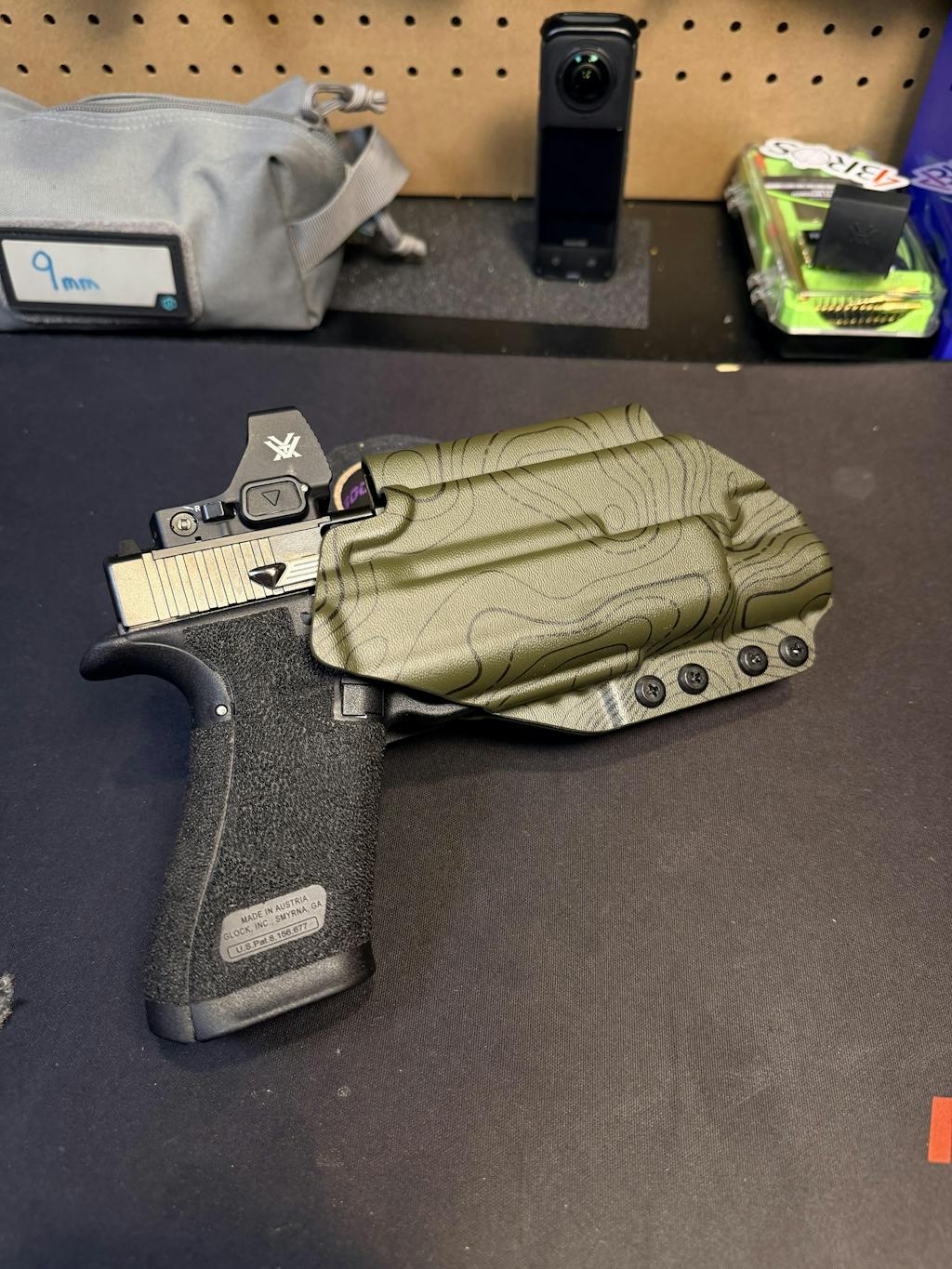
Most EDC setups use inside-waistband (IWB) or appendix carry positions. These holsters are typically made from form-fitted Kydex with adjustable retention, full sweat guards, and minimal material to reduce printing under your shirt. They're designed around the reality that you're carrying while going about regular life, not wrestling through underbrush or climbing over rocks.

Why Are Hunting Holsters Built So Differently?
Hunting holsters face an entirely different set of challenges. When you're navigating rough terrain, climbing into tree stands, or pushing through thick brush, your sidearm needs to stay absolutely secure.
Hunting holsters are engineered for:
- Maximum retention during aggressive movement
- Protection from the elements and impacts
- Compatibility with chest rigs, backpacks, and binoculars
- Carrying larger-frame hunting revolvers or pistols
- Durability in harsh outdoor conditions
These holsters often feature deeper retention with thumb breaks, straps, or Level II security systems. Many use chest-mount or drop-leg configurations to keep the firearm accessible while wearing a heavy pack. Quick access takes a back seat to bombproof retention. You cannot afford to lose your sidearm miles from camp.

Can You Use an EDC Holster for Hunting?
Technically? Yes. Practically? That's where things get complicated.
An EDC holster in the backcountry risks losing your firearm during intense physical activity. The passive retention that works perfectly for daily carry isn't designed for scrambling over deadfall or hauling yourself into a stand. You'll also find that IWB holsters conflict with pack hip belts and don't accommodate the larger hunting revolvers many outdoorsmen prefer.
Beyond functionality, there's comfort. What feels fine during a trip to the grocery store becomes unbearable after eight hours on the mountain with a 50-pound pack.

Can You Use a Hunting Holster for EDC?
Again, it is technically possible but far from ideal.
A hunting holster for everyday carry introduces unnecessary bulk that's nearly impossible to conceal under normal clothing. The additional retention systems that keep your gun secure on the trail slow your draw significantly. Most hunting holsters use OWB or chest configurations that simply don't work with street clothes and daily routines.
You'd also be dramatically over-equipped for the task. It's like wearing mountaineering boots to the office—they're excellent boots, just completely wrong for the application.
What Should You Actually Carry?
- For EDC: Choose a quality IWB or appendix holster specifically molded for your firearm and any mounted lights. Look for adjustable retention, a full sweat guard, and attachment systems that work with your carry position and belt setup.
- For hunting: Select a holster with active retention designed for your specific firearm. Consider your typical hunting activities. Tree stand hunters might prefer a chest rig, while spot-and-stalk hunters might choose a quality OWB with a retention strap.
- For both: Many gun owners simply need two different holsters. A Sig P365 with a Streamlight TLR-7 Sub works beautifully for EDC in an IWB holster, while a Ruger Redhawk rides safely in a dedicated hunting rig.
Finding the Right EDC Holster
The best EDC holsters share several critical features that separate them from cheaper alternatives.
Custom molding for your specific firearm ensures a precise fit that won't allow movement or rattling. Adjustable retention lets you dial in the perfect balance between security and draw speed. A full sweat guard protects both your gun and your skin from moisture and discomfort during all-day carry.
Quality hardware matters more than many realize. Look for holsters using long screws with maximum thread engagement and an included threadlocker. These details prevent the loosening and failure that plague cheaper holsters after a few months of carry.
The attachment system should match your carry style—whether that's traditional belt clips, soft loops, or modern quick-attachment systems. Your holster is only as good as its connection to your belt.

Frequently Asked Questions
Can I use the same holster for concealed carry and open carry?
Many quality OWB holsters work for both, but IWB holsters are specifically designed for concealment. If you regularly switch between the two, consider separate holsters optimized for each carry method.
Do I need a different holster if I add a weapon light?
Yes. Holsters are molded to specific firearm and light combinations. Adding a Streamlight TLR-7 Sub to your P365 means you need a holster specifically made for that setup.
How tight should my holster retention be?
You should be able to draw smoothly with deliberate motion, but the gun shouldn't fall out when the holster is inverted and shaken. Start tighter and adjust looser if needed. It's easier to reduce retention than add it.
What's the difference between IWB and AIWB?
Both are inside-waistband carry. AIWB (appendix inside waistband) specifically refers to carrying in the front of your body, roughly at the 1 o'clock position. It's become increasingly popular for its concealment and access advantages.
How long do quality Kydex holsters last?
With proper care, a quality Kydex holster should last many years. The material doesn't break down from sweat or moisture like leather, and well-made holsters won't crack or lose retention with regular use.
Why Purpose-Built Gear Matters
Your holster is purpose-built equipment that should match your specific mission. Trying to use one for the other's job creates compromises that range from uncomfortable to potentially dangerous. The investment in mission-specific gear pays dividends in confidence, comfort, and capability.
Choose holsters built for your actual carry needs, invest in quality over price, and you'll understand why serious carriers wouldn't consider mixing up their hunting and EDC setups.
To upgrade your carry setup, explore holsters custom-molded for your specific firearm, light, and carry style. All of our gear is proudly made in the USA and shipped within 24-48 hours.