
EDC vs. Hunting Handguns: What Should You Actually Carry?
Blog TeamTL;DR
- Full-size handguns like 10mm or .45 make perfect sense when you're hunting, but maybe not so much for daily carry.
- Subcompact 9mm pistols dominate EDC because they’re easier to conceal and live with.
- Trying to use one setup for both usually means you’re compromising, which is ok if necessary.
Most people don’t think about this until they try to carry the same gun everywhere.
What works well when you’re hunting doesn’t work great when you’re sitting, driving, or moving through your day. And what you carry every day isn’t built for the realities of the field.
The difference comes down to how the gun is actually used.

What Do Most People Carry For EDC?
Everyday carry is built around consistency. Most people rely on a compact or subcompact 9mm because it’s easy to conceal, widely available, and manageable to shoot.
A smaller frame disappears under normal clothing. Lighter weight makes it realistic to carry all day. And you can walk into almost any store and find 9mm ammo without thinking twice.
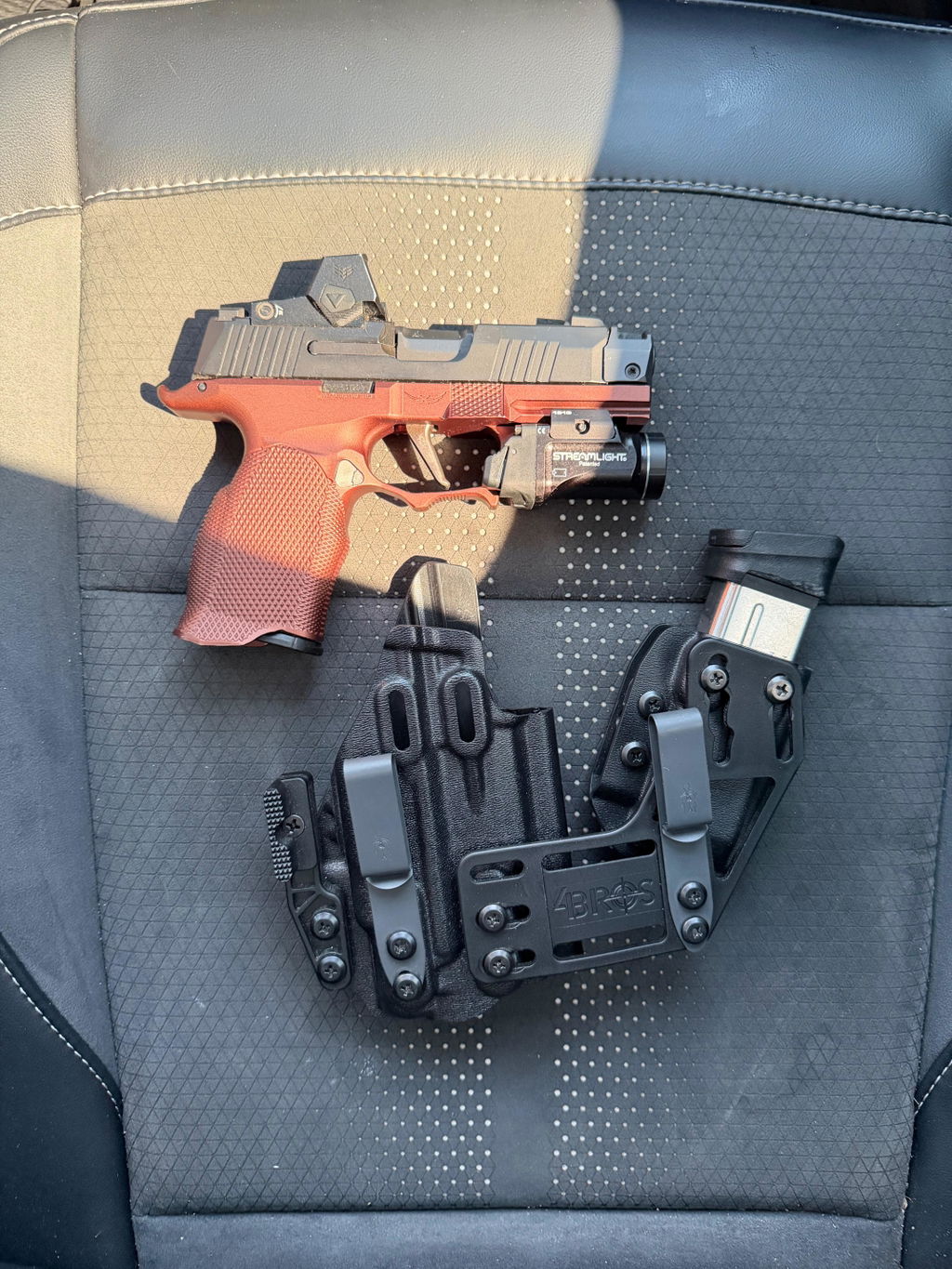
Lights follow the same pattern. The Streamlight TLR-7 Sub has essentially locked in the subcompact EDC category. It’s compact, reliable, and built for concealed setups. The TLR-7X is another strong option that gives you similar flexibility.
This is a setup designed for daily life, not edge cases.
What Changes When You’re Hunting?
Once you’re in a hunting or backcountry environment, priorities shift quickly.
Concealment doesn’t matter. Access, retention, and capability do.
That’s where larger handguns come in. Full-size 9mm, 10mm, and .45 platforms are common because they offer more control, longer barrels, and better overall performance in unpredictable conditions.
10mm stands out for a reason. It’s not what most people carry every day, but when you're dealing with predators, you’re not looking for the smallest option. You want something that can actually stop a threat.
That’s where 10mm fits.

Why Doesn’t A Full-Size Handgun Work For EDC?
A full-size handgun with a longer barrel and a large weapon light sounds great until you try to carry it inside the waistband.
It adds bulk. It digs into you when you sit. It prints under clothing. Over time, it becomes something you leave at home. And once you stop carrying, the setup stops working.
Most people who try to carry a full-size setup every day end up moving back to something smaller and more practical.
What Weapon Lights Make Sense For Each Setup?
Lights follow the same split as the gun itself.
When you’re hunting or running an open carry setup, larger lights like the Streamlight TLR-1 make sense. They offer strong output and proven performance without overcomplicating things.
For EDC, the TLR-7 Sub continues to lead. It keeps the footprint small while still giving you usable light when you need it. The TLR-7X sits right behind it as a solid alternative.
There’s a middle ground. A compact 9mm with a TLR-7X can stretch into both roles if needed. It’s not a dedicated hunting setup, but it gives you enough capability without going oversized.

How Do People Actually Carry When They’re Hunting?
Very few people are putting a full-size 10mm inside their waistband and heading into the woods.
Most move to external carry.
Chest rigs are one of the most practical options. They keep your firearm clear of pack straps and waist belts, and they stay accessible whether you’re moving, climbing, or sitting.
Hook and loop bag mounts are another option. They let you stage your firearm inside a pack or bag while still keeping it secure and accessible when you need it.
Both approaches are built around movement and environment, not concealment.
Can You Use One Setup For Both EDC And Hunting?
You can, but it usually comes with tradeoffs.
A smaller 9mm is easy to carry every day, but it’s not what most people want when they’re deep in the woods. A full-size 10mm performs well in the field, but it’s difficult to carry consistently.
Most people who spend time in both environments end up with two setups.
One built for daily carry. One built for the field.

What Should You Actually Carry?
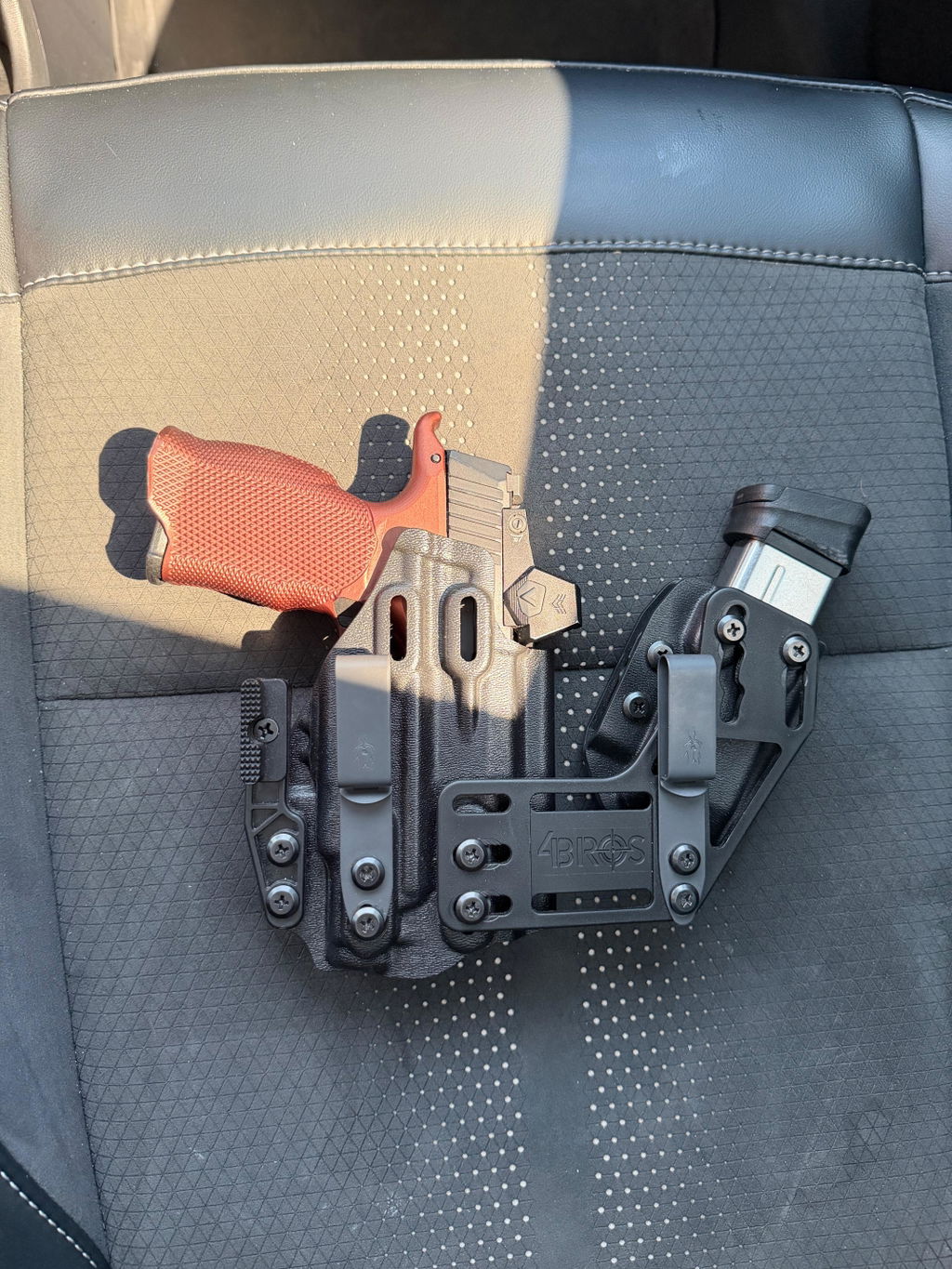
If you’re carrying every day, a compact or subcompact 9mm with a properly fitted holster and compact light is the standard for a reason. It’s easier to conceal, easier to carry, and easier to stay consistent with.
If you’re hunting, most people step up in size and move to an external carry system. A full-size handgun, often in 10mm or .45, paired with a chest rig or bag setup, is a more realistic approach.
Once you match the setup to the environment, the decision becomes straightforward.

Where Do Holsters Fit Into This?
Once you understand the difference in setups, holsters stop being confusing.
Larger firearms need retention, durability, and a mounting system that works with your gear. Smaller EDC firearms need concealment, comfort, and consistency.
They solve different problems.
If you’re running a 10mm or full-size handgun in the field, look for chest rigs and holsters built for that platform. If you’re carrying a subcompact 9mm every day, a purpose-built IWB holster designed for your firearm and light will make all the difference.
Choosing the right setup starts with choosing the right role.
To upgrade your carry setup, explore holsters custom-molded for your specific firearm, light, and carry style. All of our gear is proudly made in the USA and shipped within 24-48 hours.